
Praxys Labs · Legends
The Traders Who Rewrote the Rules
Study how the greatest traders thought, risked, and won. Soon — practice their exact playbooks inside Praxys.
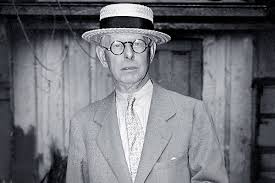
Jesse Livermore
“The Boy Plunger” · 1877 – 1940
Shorted the 1929 crash — made $100 million in a single day (≈ ₹1,300 crore today).
Livermore started at 14 as a chalk boy in a Boston brokerage, writing stock prices on a blackboard. By 15, he had made his first $1,000 speculating against bucket shops — playing prices before modern markets existed.
He read price and volume the way most people read language — finding rhythm, tension, and release in the tape's movements. No charts, no news, no fundamentals. Just price telling a story, if you knew how to listen.
In 1929, while the world celebrated endless prosperity, Livermore quietly built the largest short position in history. When Black Tuesday arrived, he made $100 million in a single day — and became the most feared trader who ever lived.
He invented tape reading as a craft. Every modern price-action trader — every person who says "let the chart tell the story" — is standing on Livermore's shoulders. His rules, written in 1923, still appear in trading books today.
“The market is never wrong — opinions often are.”
— Jesse Livermore
Radhakishan Damani
“The Professor” · b. 1954
Built DMart (Avenue Supermarts) from scratch. ₹2.5 lakh crore market cap today. Net worth ~$28 billion.
Damani's father was a small-time stockbroker who died early, forcing a young Radhakishan to drop out of college and take over the family brokerage at the Bombay Stock Exchange. He had no pedigree, no mentor, no capital — only patience and an obsessive eye for value.
Through the 1990s he became one of BSE's most feared operators — shorting overvalued stocks with precision while others chased momentum. His most celebrated call was systematically shorting Harshad Mehta's inflated portfolio during the 1992 securities scam, walking away with crores while the market collapsed.
He quietly taught a brash young trader named Rakesh Jhunjhunwala the discipline of deep value and conviction holding. Jhunjhunwala called him the single biggest influence on his philosophy. In the early 2000s, Damani exited the markets entirely — and built DMart, applying the same principles: buy when cheap, hold forever, never compromise on fundamentals.
Damani did what almost no trader ever does — he used the market to build something real. His DMart thesis is identical to his investing thesis: relentless cost discipline, long holding periods, and the refusal to sell what is working. He is the teacher behind India's greatest investor.
“Buy right and sit tight. Let compounding do what it does.”
— Radhakishan Damani
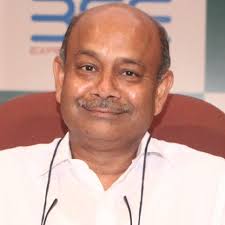

Paul Tudor Jones
“PTJ” · b. 1954
Predicted Black Monday 1987. His fund returned +200% while the S&P fell 60%.
Jones didn't inherit capital or an Ivy League pedigree. He learned to trade cotton under Eli Tullis in New Orleans — sleeping under his mentor's desk in his first year. The fundamentals he learned there: position sizing, the 5:1 rule, never adding to a loser.
In 1987, when most traders saw stability, Jones saw the shape of 1929 forming in the charts. He shorted equity markets globally and placed careful hedges. On Black Monday, his fund returned 200% while the world burned.
For 20 consecutive years, Tudor Investment Corp did not have a losing year. That is not a streak — it is a system. Built around one rule: risk $1 only when you believe you can make $5.
Jones proved that risk management is the actual edge — not which trades you take, but how much you lose when you're wrong. His 5:1 risk-reward rule is the most teachable, most reproducible framework in trading history.
“Losers average losers.”
— Paul Tudor Jones
Rakesh Jhunjhunwala
“The Big Bull” · 1960 – 2022
Bought Titan Company at ₹3 in 1986. Held 36 years. Turned ₹5,000 into ₹40,000+ crore.
Jhunjhunwala started with ₹5,000 — borrowed from his brother — and a seat in a brokerage where he paid no fees in exchange for reconciling accounts. No Bloomberg terminal. No seed capital. Just conviction and time.
He saw India before India knew what it was. He bought Titan when it was selling watches in a country that barely had disposable income. He bought HDFC Bank when Indian banking was state-owned chaos. He didn't find undervalued stocks — he found an undervalued nation.
By 2022, his portfolio exceeded ₹40,000 crore. He had backed companies from ₹3 to ₹3,000. His thesis never changed: bet on India's growth, hold with conviction, and never sell what is working.
Jhunjhunwala is India's market. He proved that patient, conviction-driven investing applied to a growing economy is among the most powerful strategies in history — and he proved it from Mumbai, not Manhattan.
“India's best days are ahead of it. Always be invested in India.”
— Rakesh Jhunjhunwala

More legends coming soon
Stanley Druckenmiller · William O'Neil · Ed Seykota · Charlie Munger